
Even experienced importers and distributors operating in international markets can face a serious problem: The supplier receives full prepayment but never delivers the goods.
At Rus–Türk Hukuk ve Danışmanlık Şirketi (RT-Union), our international legal team helps clients recover blocked payments and protect their business interests through cross-border arbitration and debt enforcement.
The Case: How a Prepayment Turned Into a Legal Dispute
In 2024, a large Russian trading company made several prepayments to suppliers based in different jurisdictions — in the Middle East and South America — for the purchase of food products.
The total prepayment exceeded USD 750,000 (around €700,000).
Despite full payment, no shipment was made.
Later, the foreign suppliers claimed they were “retaining the prepayment” to cover alleged internal losses, referring to clauses in their general sales terms.
However, no evidence of any real losses or contractual breach by the buyer was provided.
In practice, the company found itself in a typical but highly risky situation:
- The goods were not delivered.
- The advance payment was withheld abroad.
- Several bank transfers were rejected or delayed due to new international compliance checks and banking restrictions.
The Common Mistake: Blind Trust in Standard Contracts

One of the most frequent causes of cross-border disputes is the lack of independent legal due diligence before signing international contracts.
Many European and Russian importers sign supplier-drafted templates without legal adaptation.
These documents often include clauses allowing:
- unilateral retention of prepayments,
- foreign exclusive jurisdiction,
- non-refundable deposits in “force majeure” situations — effectively depriving the buyer of any recovery options.
As a result, a well-intentioned company becomes legally and financially vulnerable the moment payment leaves its account.
How RT-Union Resolved the Situation
Our legal team conducted a full-scale audit of the contracts, payment records, and correspondence between the parties.
We established that:
- the prepayment was properly executed,
- the goods were never shipped or even cleared for dispatch,
- the supplier’s retention of funds violated the United Nations Convention on Contracts for the International Sale of Goods (CISG, 1980).
RT-Union then issued formal pre-arbitration notices to the counterparties, fixing the delay (“temerrüt”) and demanding repayment.
When no resolution was reached, we prepared a comprehensive statement of claim to be filed with the Center for Arbitration and Mediation of the Chamber of Commerce Brazil–Canada (CAM–CCBC) — one of Latin America’s leading international arbitration centers.
Arbitration and Enforcement Strategy
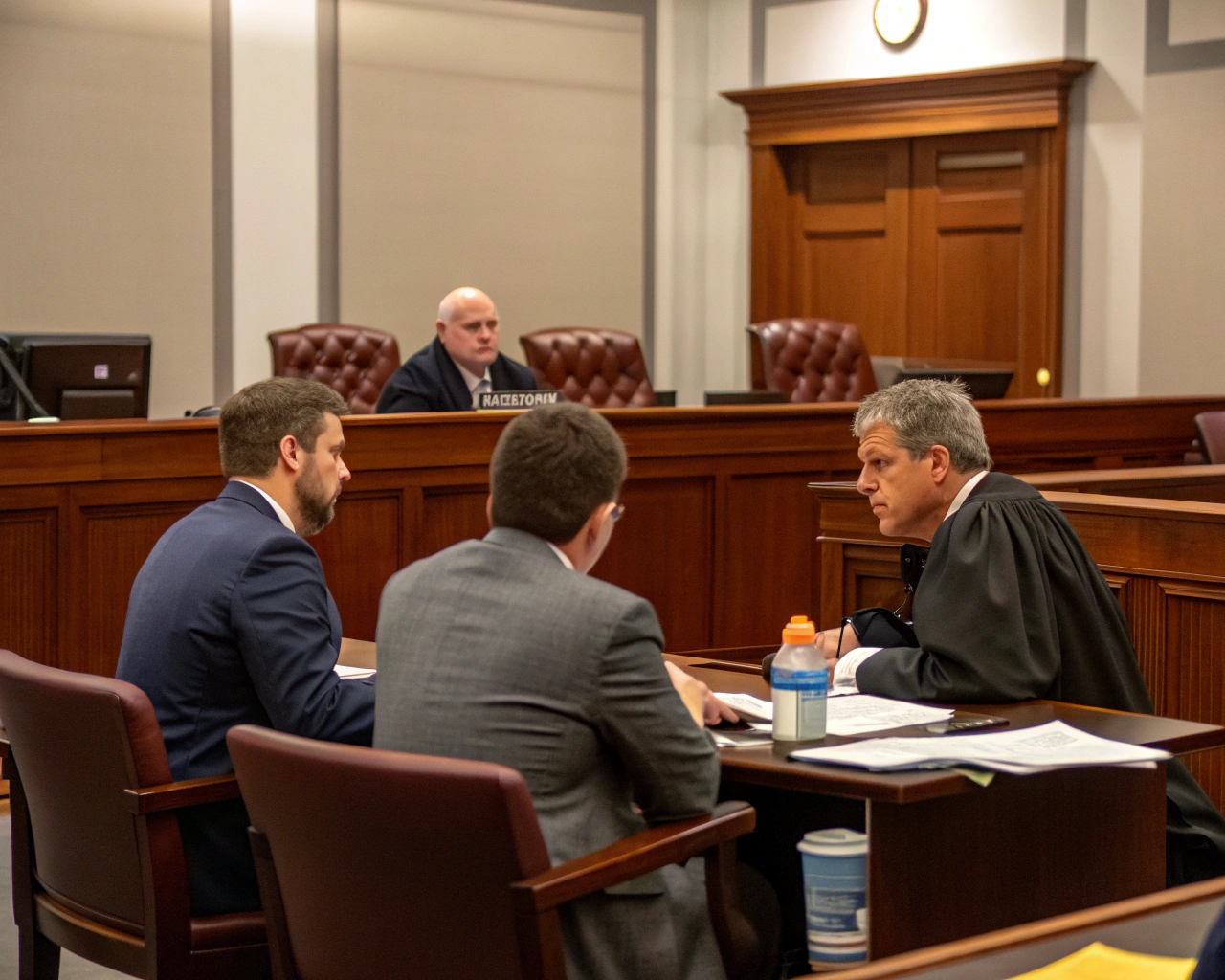
At the pre-trial stage, RT-Union’s lawyers conducted negotiations with the counterparties’ representatives in Brazil and the Middle East, seeking an amicable solution.
After the talks failed, a formal claim was lodged with CAM–CCBC, including demands for:
- repayment of the principal debt,
- contractual penalties for late delivery,
- reimbursement of logistics and storage costs.
The claim was submitted by an international team of lawyers licensed in Turkey, Russia, and Brazil.
Our legal strategy also includes recognition and enforcement of the arbitral award in multiple jurisdictions — including the European Union, Turkey, the United Arab Emirates, Brazil, and Russia — in accordance with the 1958 New York Convention on the Recognition and Enforcement of Foreign Arbitral Awards.
This approach ensures that a favorable award can be enforced globally against the debtor’s assets, regardless of where they are located.
Parallel Asset Protection and Compliance
Simultaneously with arbitration, RT-Union protected the client’s assets and ensured compliance with financial regulations:
- prepared reports for the Russian Federal Tax Service on foreign accounts (per Order No. ММВ-7-6/485@),
- communicated with international banks to justify transaction delays,
- developed a compliance roadmap to prevent penalties under Article 15.25 of the Russian Code of Administrative Offences.
Additionally, our lawyers launched a criminal fraud investigation in Russia against a third-party intermediary who unlawfully diverted part of the client’s funds — a growing risk in digital trade involving electronic signatures and intermediaries.
Lessons for Businesses Engaged in Cross-Border Trade
- Never make prepayments without legal due diligence on both the contract and the counterparty.
- Ensure contracts reference international standards, such as CISG and Incoterms 2020, not domestic supplier templates.
- Negotiate neutral arbitration clauses — ICC, LCIA, CAM–CCBC, or ISTAC — located in countries with reliable enforcement.
- Preserve payment confirmations, invoices, and correspondence — they are key evidence for international recovery.
- Work with licensed international lawyers able to represent your company across jurisdictions.
Expert Insight
“Cross-border recovery requires not only knowledge of international law but also the ability to operate seamlessly across jurisdictions.
At RT-Union, we represent clients in Russia, Turkey, and Brazil to ensure that every euro and dollar can be legally recovered,”
says Attorney Funda Inal Cukavin,
a member of the Antalya Bar Association (Reg. No. 2054) and head of international dispute resolution at RT-Union.
About RT-Union
Rus–Türk Hukuk ve Danışmanlık Şirketi (RT-Union) is a Turkish-Russian international law firm providing cross-border legal services for corporate clients.
Our expertise includes:
- international arbitration and litigation,
- corporate law and commercial transactions,
- debt recovery and enforcement,
- compliance and regulatory advisory for trade and finance.
We operate under the principle of “One Legal Window” — bridging legal systems of Russia, Turkey, and the European Union.