Recovering Rental Payments under a Commercial Property Agreement in Turkey – What to Do When the Counterparty Stops Paying (2026)
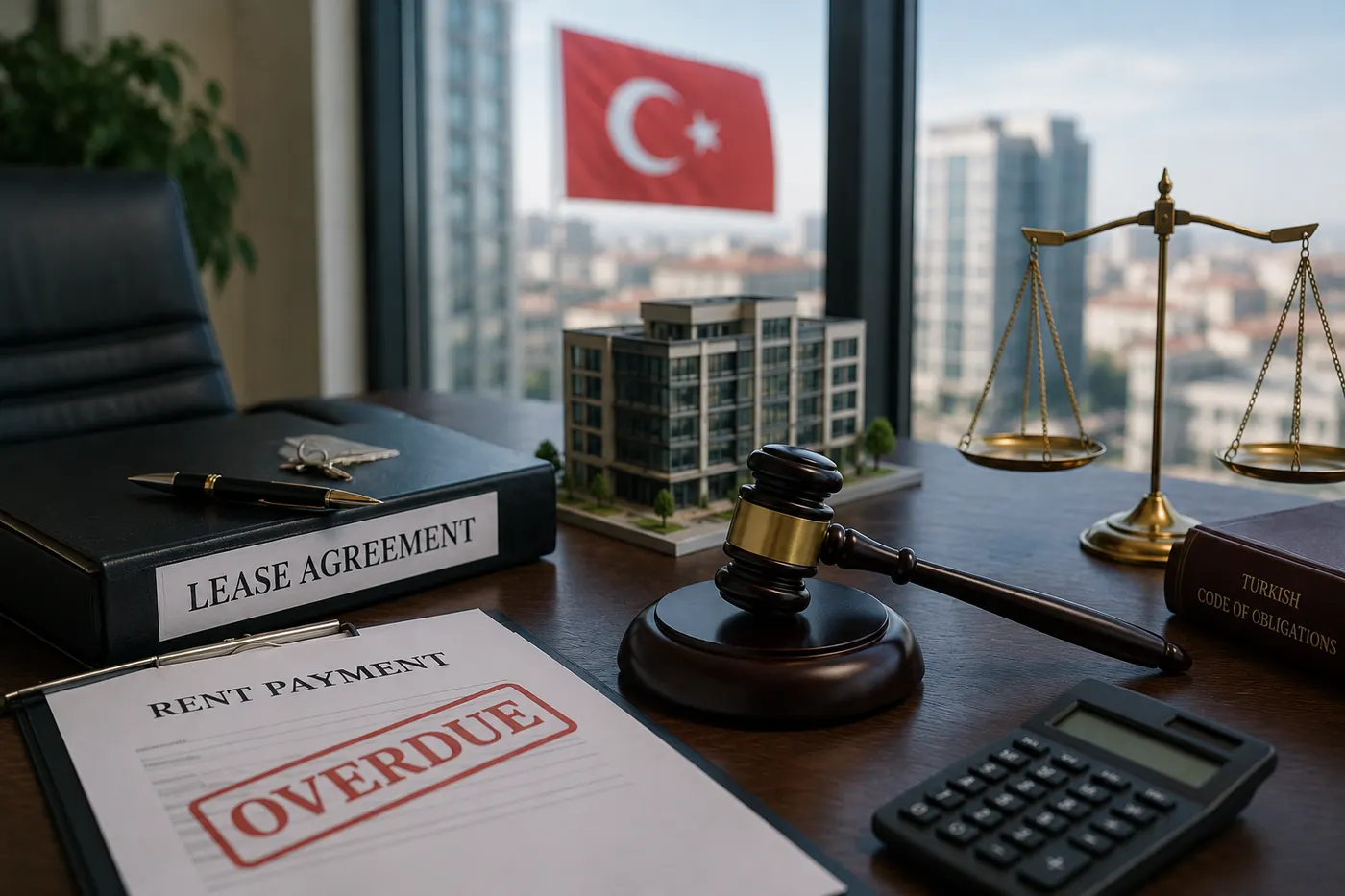
Recovering Rental Payments under a Commercial Property Agreement in Turkey
However, in 2025–2026, an increasing number of cases have arisen where, after several years of regular payments, the counterparty suddenly ceases performance.
A popular investment structure among European clients involves purchasing commercial property in Turkey combined with a long-term rental agreement under which the seller (or a related company) undertakes to pay regular rent.
Real case
Agreement dated 30 November 2022.
- 2023 – rent paid in full;
- 2024 – rent paid in full;
- 2025 – only partial payment received;
- 2026 – no payments. The company representative cites "internal problems".
An additional issue concerns taxation. Under the contract, all taxes were to be borne by the Turkish party, yet the tax for 2025 has not been fully paid.
What can be claimed?

- Outstanding rental payments.
- Contractual penalties (if provided for in the agreement).
- Statutory interest for late payment.
- Damages related to unpaid tax liabilities.
- In certain cases, termination of the agreement and recovery of the property's value.
Recommended course of action
Step 1. Send a formal notarial notice (ihtarname)
This is a mandatory pre-action step. The notice should clearly state:
- the exact amount outstanding;
- the relevant payment periods;
- a deadline for payment (usually 15 days);
- the intention to commence court proceedings in the event of non-payment.
Step 2. Check the financial status of the counterparty
It is essential to verify whether the company has entered concordato (debt restructuring) or bankruptcy proceedings. This significantly affects both the litigation strategy and the prospects of recovery.
Step 3. File a claim
If the debt remains unpaid, proceedings should be commenced before the competent commercial court.
Expected duration of proceedings
- First instance: typically 8–18 months.
- Appeal: an additional 6–12 months.
The overall duration depends on the court's workload, the complexity of the evidence and the parties' procedural conduct.
Prospects of success

Where the contract is clearly drafted, previous payments can be evidenced and the rental obligations are well defined, the claimant's position is generally strong, particularly where the agreement expressly allocates all tax liabilities to the Turkish party.
Conclusion
Delaying legal action while waiting for voluntary payment increases the risk that the counterparty may enter restructuring or insolvency proceedings, making recovery substantially more difficult.
RT-Union lawyers have extensive experience in recovering rental payments from Turkish companies, including the preparation of formal notices, contract analysis and full representation before Turkish courts. Chukavin Pavel - Partner & Attorney at Law 2026-07-28 13:58